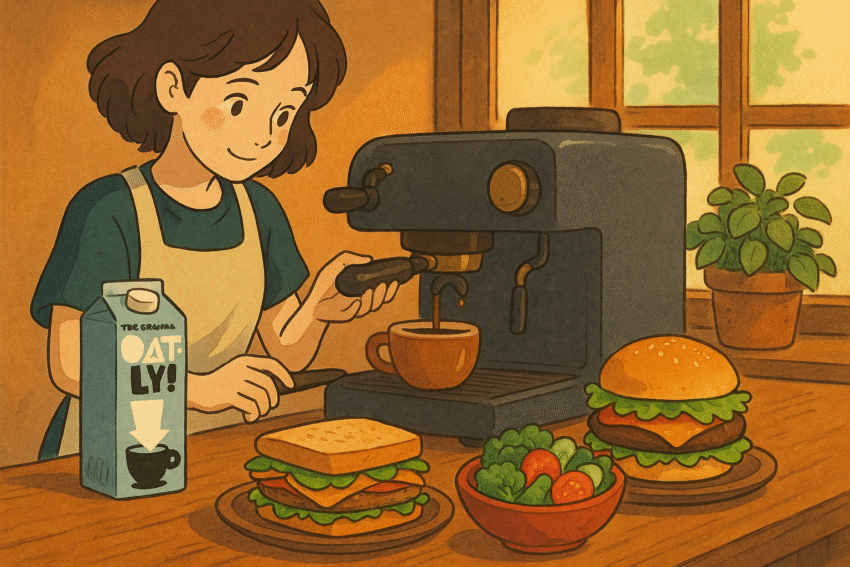
The rise of oat milk from obscure alternative to café staple is a modern food legend. Not long ago, few people had even heard of “oat milk.” Today, oat milk lattes are as common as their dairy counterparts, and plant-based milks command 15% of the total milk market (The Good Food Institute, 2024). Why did oat milk surge ahead, while plant-based meat works toward its own mainstream moment? The answer involves everything from lactose intolerance to latte art, and it might hold the key to the future “coffee moment” that could finally make plant-based meat a fixture in everyday life.
Glass vs. Plate: Why Plant Milk’s Path Was Smoother
Plant-based milk and plant-based meat may share a mission, but their journeys have been worlds apart. One key reason is how we use them. Milk is a supporting player, whether stirred into coffee, poured over cereal, blended into smoothies, or used as an ingredient in recipes. Meat, on the other hand, is often the centerpiece of the plate. Swapping out cow’s milk rarely sparks strong emotions, but swapping out a burger or steak can feel deeply personal, touching on tradition and comfort.
Health considerations also greased the wheels for plant-based milks. With around 68 percent of the world’s population lactose intolerant, there was a built-in audience eager for alternatives. Earlier options like almond and soy milk made the idea of dairy-free milk familiar, so by the time oat milk arrived with its creamy taste and no tummy troubles, adoption was smooth. Plant-based milk had an easier story to tell. If it tasted good and frothed well, people were happy to give it a try. Plant-based meat, meanwhile, has had to overcome much greater skepticism and cultural baggage, making its path much steeper. Coffee became the perfect use case for oat milk — a cultural and practical fit that catapulted it into the mainstream. Plant-based meat is still waiting for its own “coffee moment.”
The Barista Effect: How Coffee Shops Made Oat Milk Cool
Oat milk didn’t become a star by accident. It hustled its way into the spotlight through coffee shops and baristas. Back in 2016 and 2017, a Swedish brand called Oatly quietly started appearing at hip cafés in New York City. There was no big advertising campaign or massive retail launch. Instead, Oatly’s team took a grassroots “barista-based” approach, literally going door-to-door to trendy coffee shops, handing out free cartons and training baristas to steam and froth oat milk so it would shine in espresso drinks. Oatly’s milk could whip, froth, and microfoam just like cow’s milk, sometimes even better (resources.latana.com).
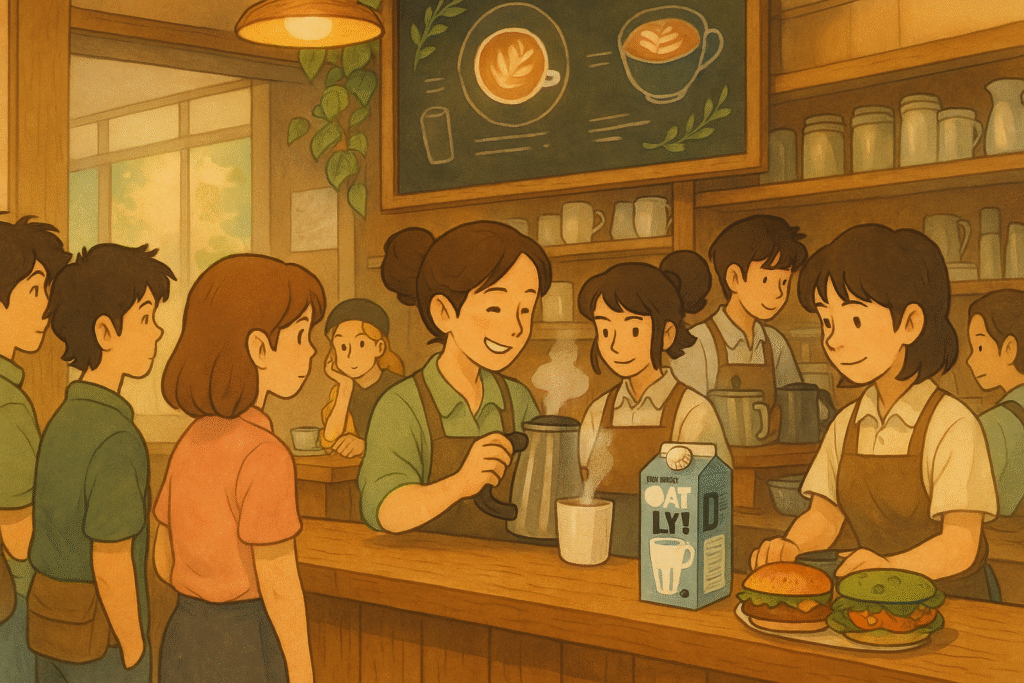
The approach paid off quickly. Baristas genuinely fell in love with oat milk because it solved a real problem: it was the first plant milk that truly “worked” in coffee without compromise. “Baristas, long frustrated with the inconsistent performance of existing plant milks, quickly embraced Oatly as a superior alternative that could produce proper microfoam, maintain stability in hot beverages, and complement coffee flavors,” as one account noted (resources.latana.com).
By early 2017, oat milk had become a mini-phenomenon in New York’s coffee scene. Cafés began posting cheeky signs like “Sorry, we’re out of oat milk” as demand outstripped supply. People called ahead to see if their local coffee shop had oat milk in stock, and on Instagram, latte art photos featuring Oatly cartons went viral among coffee lovers. All of this happened before oat milk even appeared on most grocery store shelves — it was a cultural breakthrough born in steaming pitchers and espresso cups. Oatly didn’t immediately rush to put its milk everywhere; for months, it was available only in select indie coffee shops, building buzz and exclusivity. By the time grocery stores finally started carrying Oatly, the demand had already soared, and Oatly faced the rare challenge of keeping up with a wave of enthusiasm that even they hadn’t expected.
Overflowing Demand: Oatly’s Supply Struggles
Oatly’s slow-build, coffee shop-first strategy worked so well that the company was quickly overwhelmed. As demand soared, Oatly expanded internationally, entering markets across Europe, North America, and Asia, cleverly tapping into local coffee and tea cultures (www-web.itiger.com). But with success came new challenges: entering new countries meant navigating unfamiliar regulations, adapting to different consumer tastes, and competing with a wave of cheaper, copycat oat milks produced by both local brands and big dairy companies. Supply chain hiccups, crop failures, and logistics snarls added to the pressure (Bloomberg, 2023).
After its IPO, Oatly expanded rapidly, investing in new factories and ramping up capacity. However, as the initial oat milk craze cooled, they sometimes found themselves with excess supply and tougher competition, nearly every major dairy or plant-based brand had launched an oat variant, often at lower prices (Bloomberg, 2023). Despite these growing pains, Oatly’s impact was undeniable. Oat milk leapt from niche status to supermarket staple, showing how a great use case like coffee can transform an entire category.
What Could Be the “Coffee Moment” for Plant‑Based Meat?
Enthusiasts have been asking this question as meat alternatives try to break out of their vegan and vegetarian fanbase and onto the plates of die-hard carnivores. The story of oat milk offers some clues. Its success wasn’t really about convincing vegans — it was about winning over everyone else by fitting seamlessly into something people already loved (coffee) and actually making that experience better. Plant-based meat needs a similar gateway: a great use case or cultural catalyst that makes even skeptical meat-eaters realize they could enjoy swapping the meat, or even feel comfortable making the transition themselves.
What could be the “coffee” for plant-based meat — something already addictive, universally loved, and woven into daily life? The burger remains the classic use case, and plant-based brands have done a remarkable job bringing delicious options to market. But in many places, even the best vegan burgers can now struggle to spark real excitement. Most people have already tried them during those early waves of hype and may not feel compelled to try again unless something new or especially delicious grabs their attention. The next leap might not be about simply mimicking meat, but about making burgers and sandwiches genuinely unforgettable. Plant-based burgers could go beyond just competing with beef by introducing bold flavors, vibrant spices, and creative ingredient combinations. When brands focus on building a full experience — with rich sauces, double layers of flavor, and unique toppings — the vegan burger can become more than a substitute. It can turn into a sought-after favorite, celebrated on its own merits. In countries where burgers and sandwiches are already a staple,the winning strategy could be to go all in on taste, texture, and surprise building a sandwich or burger so delicious that it wins fans on its own merits, no meat comparison required.
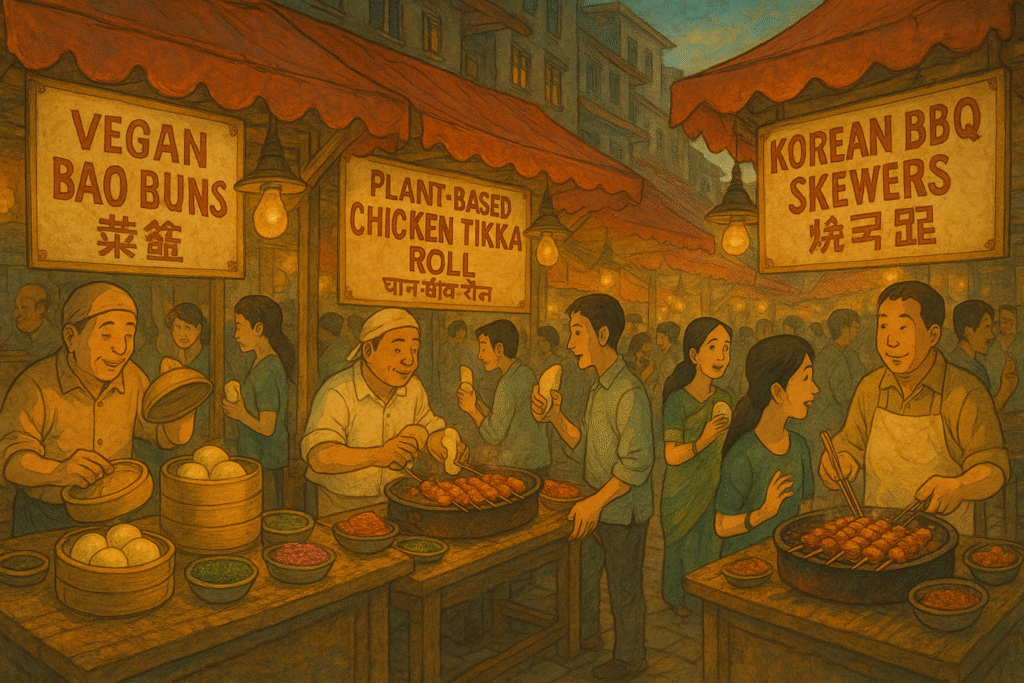
The “coffee moment” for plant-based meat could look completely different depending on the country and culture. In Asia, a breakthrough might come from entering the world of iconic street foods with plant-based versions that honor tradition while offering something entirely new. A plant-based chicken tikka roll could become a must-have snack on the streets of Mumbai, vegan bao buns might become a favorite in Shanghai, or Korean BBQ skewers could draw crowds at night markets. These are foods people crave and gather around, making them the perfect platform to introduce irresistible plant-based options. When brands master the textures, flavors, and local profiles people love, plant-based meat stops being just an alternative and becomes another kind of great food. The conversation then shifts away from plant-based versus meat and instead centers on great taste, exciting flavor, and healthier choices that everyone can rally behind.
Connect With Me
Thank you for reading. 🙂
If you’d like to continue the conversation, feel free to reach out to me on LinkedIn. I’d love to hear your perspective.