The New Food Frontier: Not Just for Vegans Anymore
Plant-based meat, once a niche choice for vegans, has become a mainstream force at fast-food chains, backyard barbecues, and dinner tables in the US, the UK, Europe, and around the world. The modern plant-based burger isn’t just for the few; it is aimed at everyone, from committed carnivores to curious flexitarians and health-conscious eaters who want the taste and protein of meat without the environmental impact or extra saturated fat.
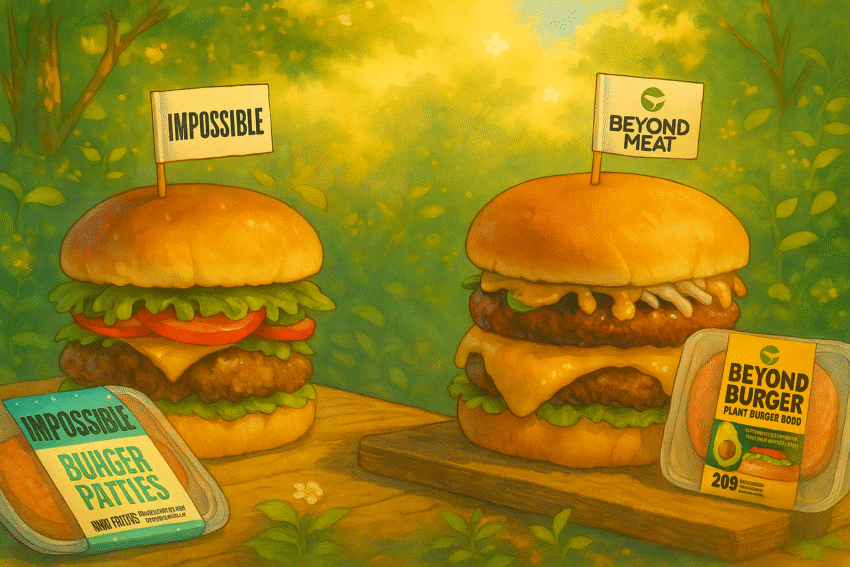
Impossible Foods and Beyond Meat started the global movement as true disruptors, capturing headlines and appetites with their innovative products. Their arrival sparked a massive boom in plant-based sales and fueled a wave of curiosity and excitement. While the momentum has cooled since the early surge, the numbers still tell an impressive story. In 2024, U.S. sales of plant-based meat alternatives topped $1.1 billion, well above 2019 levels even though the market has softened from its pandemic peak (Circana, 2024; Good Food Institute, 2024). Globally, plant-based meat retail sales reached $1.2 billion, showing that this is no passing fad but a category that is here to stay (GFI, 2024). Plant-based meat has proven it is not just a “vegan thing” – it is an innovation for anyone who craves familiar flavors with a better nutrition profile, offering plenty of protein, less saturated fat, and a side of positive impact.
Trailblazers at the Table: Impossible Foods, Beyond Meat, and the Birth of a Movement
The plant-based revolution did not just happen overnight. It was built, one bold experiment and headline at a time, by a new breed of food pioneers. Two companies in particular, Impossible Foods and Beyond Meat, helped transform the idea of plant-based meat from a niche curiosity into a cultural phenomenon.
Impossible Foods, founded in 2011 by scientist Dr. Pat Brown, took a radically scientific approach. Their mission was to create meat without the cow, aiming for taste and texture that could truly rival beef. Years of research led to their key breakthrough: heme, a molecule responsible for the meaty flavor and juicy sizzle. With $75 million in funding and a relentless focus on R&D, Impossible launched its flagship burger in 2016, partnering with celebrity chefs and starting in high-end restaurants. The goal was never to impress vegans alone, but to win over devoted meat eaters and inspire a broader shift toward sustainable eating. CEO Pat Brown described plant-based meat as not just a product, but the beginning of a new, better food system.
Beyond Meat captured global attention with its 2019 IPO, one of the most successful in food industry history. As the first pure-play alternative meat company to go public, Beyond Meat quickly formed partnerships with major restaurants and retailers, even landing its patties in McDonald’s in France. By 2020, U.S. sales of meat alternatives soared to $1.3 billion, reflecting the mainstream appetite for change. Beyond Meat’s stock soared to $234 during the height of the plant-based boom, before settling closer to $3 in 2025. This dramatic shift highlights not just the early excitement, but also the real challenges and growing pains of leading an entirely new category (CNBC, 2024).
Yet the road has not been easy. Both Impossible and Beyond faced major challenges as they scaled, especially around pricing, supply chain, and consumer expectations. Many wondered if plant-based meat could ever achieve the dominance of plant-based milk or truly disrupt the trillion-dollar animal protein industry. As their influence grew, both companies became targets for criticism and skepticism from entrenched industry players.
Despite these challenges, the impact of these trailblazers is undeniable. They took plant-based meat from the fringe to the mainstream, sparked a wave of innovation, and started a global conversation about the future of food.
The Plant-Based Ripple Effect: Shaking Up Giants & Shifting Markets
The rise of Impossible Foods and Beyond Meat did more than launch new products; it sent shockwaves through the global food industry. The plant-based movement, often focused on powerful messages about the environment and animal welfare, sometimes unintentionally put the traditional meat industry and its customers on the defensive. Campaigns meant to inspire change could come across as confrontational, making some meat eaters feel judged or alienated instead of welcomed. This unintended “us versus them” dynamic has, at times, pushed away the very people that plant-based brands need most: mainstream, everyday consumers who still love meat.
Feeling threatened by the rise of plant-based innovation, some in the meat industry have responded with skepticism and even misinformation campaigns. Yet, industry leaders like Impossible Foods’ CEO Peter McGuinness remind us that the true growth opportunity lies not with vegans or vegetarians, but with the vast majority of flexitarians and meat eaters. The global meat industry is valued at $1.4 trillion and continues to grow, making it clear that the addressable market is enormous but only if plant-based brands appeal to meat eaters. Success in this space means offering products that invite everyone in, focusing on enjoyment, better nutrition, and positive impact, rather than dividing people by their choices.
Hype, Headlines & Health Claims: Untangling the “Ultra-Processed” Debate
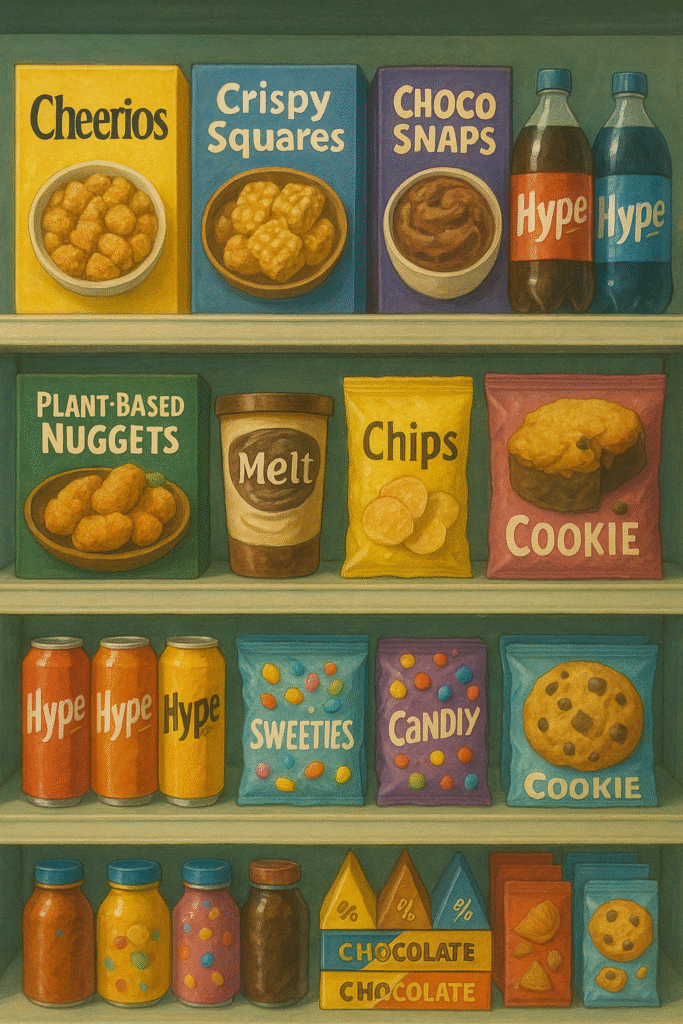
As plant-based meat became mainstream, it faced a flood of headlines and controversy around the label “ultra-processed.” Critics and the meat industry were quick to question the health value of these products, claiming that making meat from plants is “too processed” to be a better option. Yet, this narrative often ignores a major truth: many of the most popular foods in supermarkets are highly processed, from instant noodles to soft drinks and packaged snacks. Nearly 70 percent of the average grocery store is filled with processed foods, but plant-based options are uniquely singled out for criticism.
What is rarely mentioned is that processed meats like bacon, sausage, and ham are classified as Group 1 carcinogens by the World Health Organization, meaning there is strong evidence they can cause cancer, on the same level as smoking. In contrast, plant-based meats are free from nitrites and do not contain the same harmful compounds found in processed animal products. While it’s true that plant-based burgers are processed, many still offer impressive nutritional profiles: they deliver high-quality protein, high fiber, are low in saturated fats, and are completely free of cholesterol and animal hormones.
Still, the confusion has been a challenge. Many meat eaters see the debate as black and white and brands have sometimes struggled to communicate their benefits clearly. Impossible Foods CEO Peter McGuinness has argued that what matters is delivering dense nutrition and great taste from plants, even if the process is new. The real challenge for plant-based brands is to tell a stronger story about what’s inside and to show that, when compared to processed meats, they are not just a safe alternative but a smart, forward-thinking choice.
The Naming Debate: Who Owns Words Like “Meat” and “Burger”?
Just imagine ham companies campaigning against “hamburgers” to avoid confusion, when in reality, hamburgers don’t even contain ham. It’s like dairy companies demanding that “almond milk” or “peanut butter” be banned because they don’t come from cows, or insisting that “coconut milk” be renamed “nut water.” Or picture butter producers arguing that “almond butter” must be called “almond paste” instead.
Even more, the word “meat” itself isn’t exclusive to animals. Trees have “coconut meat,” and people sometimes refer to the “meat” of a fruit or a nut. Words evolve with how we use them; nobody owns “meat,” “milk,” or “butter.” Today, some meat industry groups have lobbied to ban plant-based companies from using word “meat” on their packaging, and these restrictions are already being implemented in France, with similar debates ongoing in the US and other parts of Europe. In the end, these debates aren’t about preventing confusion; they’re about protecting market share. What really matters is honest labeling and giving people the power to choose what’s right for them.
Hard Truths & Trailblazer Lessons: What Impossible and Beyond Taught Us
The plant-based meat industry is still young, underpenetrated, and often misunderstood. Impossible Foods and Beyond Meat didn’t just launch new products; they set out to reinvent the food system itself, taking on the trillion-dollar animal protein industry with bold ambition and a flurry of innovation. Their mission was never small, and they came on strong, with Beyond Meat going public at a staggering $10 billion valuation (despite having only a few hundred million dollars in revenue), while Oatly quickly followed suit. The boom was real, but so was the risk of overheating.
One hard lesson for these pioneers was realizing that capturing a share of the $1.4 trillion global meat market means appealing to more than just vegans or vegetarians. Early plant-based messaging, intentionally or not, often sounded like a challenge to meat eaters or an attack on traditional food culture. While the aim was to inspire, the approach sometimes made people feel judged or pushed away, especially among devoted meat lovers. As a result, the very addressable market — the flexitarians and mainstream omnivores — felt less included, when in fact, they were always the biggest opportunity.
The reality is, most people don’t make dietary changes overnight. Flexitarians, who are open to reducing meat without going all-in, are the majority. However, for core meat lovers, the lesson for plant-based brands is to take baby steps, not leaps, and avoid framing food choices as black and white. By not making it an all-or-nothing proposition, brands can avoid making meat eaters feel targeted or offended, and instead invite them in with positive, gradual change. The most effective plant-based brands are learning to encourage small, meaningful shifts rather than demanding total transformation.
Another key misstep was the confusion between “food” and “tech.” Marketing campaigns often highlighted scientific breakthroughs, patents, and ingredients, instead of focusing on taste, enjoyment, and nutrition — the things people really care about at mealtime. Consumers found themselves asking, “Why should I buy this? Is it healthy? Will I like the taste?” If the answer wasn’t obvious, the switch rarely happened. The lesson: innovation is powerful, but great food always starts with flavor and satisfaction, not technology.
Stock market swings cast new doubts as well. When Beyond Meat’s and Oatly’s stock prices crashed, headlines suggested the business itself was flawed or plant-based was just a trend. In reality, the challenge is not that the category isn’t viable, but that growing any new food sector takes time, patience, and resilience. Investor expectations simply got ahead of the everyday adoption curve.
Finally, there’s the challenge of price and perception. Plant-based meat remains more expensive than animal protein in many markets, and as prices of ingredients and inflation rise, that gap can widen. Meanwhile, the meat industry has responded by spreading doubts and misinformation, hoping to slow the disruption.
Perhaps the biggest lesson is that the goal should never be to fight meat lovers or demonize traditional foods. True change happens by making plant-based options welcoming, delicious, and affordable, focusing on taste, value, and a gradual shift toward something better. The future of plant-based isn’t about being “against” anyone, but about inviting everyone to enjoy a new, kinder way to eat.
Let me know if you want any further tweaks or have a specific place you want to cite a source!
The Road Ahead: Growing Together for People, Animals, and the Planet
The plant-based industry is writing a new and hopeful chapter for our food system, one where taste, health, and compassion come together on every plate. With every new burger or nugget, these brands are making it easier for people to enjoy delicious meals that are better for both individuals and the environment. Their innovation is opening doors not just to new flavors but to a kinder future, where ethical choices feel accessible and exciting, not restrictive. Behind this shift is a growing awareness of the realities inside factory farms, where animals often endure overcrowded and stressful conditions that cannot be ignored by a society that cares.

Looking ahead, the next steps for the movement are clear. Keep building trust through transparency, clean labels, and community, while making plant-based options even tastier and more affordable. As more people learn about the challenges of industrial farming, from animal welfare to environmental impact, the desire for change will only grow. Plant-based companies are inviting everyone, whether vegan, flexitarian, or simply curious, to join a movement rooted in flavor, well-being, and kindness. The journey is still unfolding, but the momentum is real and the future of food has never looked more inspiring.
Connect With Me
Thank you for reading. 🙂
If you’d like to continue the conversation, feel free to reach out to me on LinkedIn. I’d love to hear your perspective. You can also follow me here on Medium for more articles on food and the future of eating.