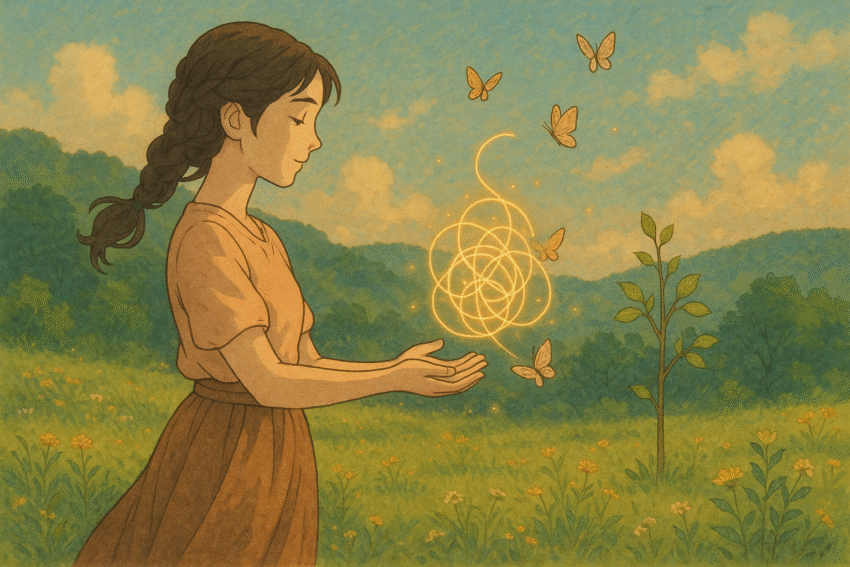
Life often teaches us that growth is about accumulating knowledge, but real adult growth sometimes means unlearning what no longer serves us. Unlearning is the conscious act of letting go of beliefs and habits that we picked up early in life – especially those that hold us back. By shedding these old patterns, we create space to become the person we truly want to be. In this post, we’ll explore how unlearning inherited beliefs and outdated mindsets can transform your life. Each section below delves into a key reason why unlearning is so important for personal growth, along with gentle guidance on how to begin this liberating journey.
We Inherit More Than We Realize: Minds of Our Ancestors & Early Circle
Have you ever paused and wondered if a belief you hold is truly yours, or something quietly inherited from those before you? Much of how we see ourselves and the world is shaped in our earliest years, as we absorb the words, hopes, and sometimes the quiet worries of parents, teachers, and everyone around us. Our families pass on what they know, always with the intention to guide and protect. They act with love and do their best, even if some beliefs they share come from times very different from our own.
When we gently reflect, we often find that some of our most persistent stories about life—about money, love, or what is possible – have deep roots in the experiences of previous generations. Many of these stories, especially old fears, were shaped by the challenges and uncertainties our ancestors faced. For instance, families who once lived through hard times may have carried a sense of caution or scarcity that still echoes today. There are also more subtle patterns. In many families, women have learned to put everyone else before themselves, believing that selflessness is the highest virtue. This can become an inherited tendency to over-give or ignore our own needs. Yet as we grow, we discover new tools and knowledge that help us gently question these patterns. The beauty is, with gratitude for all that we’ve received, we can now pause and gently ask: Does this belief serve me today? Unlearning isn’t a rejection of our roots; it’s a way to honor our family by breaking cycles that no longer serve us – choosing a new path with awareness and love, both for ourselves and for future generations.
Action Step: Take a quiet moment to reflect on one belief you have about yourself or the world. Ask yourself: “Where did this come from? Does it truly serve me now?” Write down any family or cultural stories you recognize and notice if you’d like to lovingly update any of them.
Once Aware, You Can Choose What to Keep and Remove
Awareness brings clarity, as if a soft light is shining on our inner world. Think of your mind as a beautiful garden, shaped by many hands over the years. Today, you are the gardener. You can nurture the flowers – values like kindness, resilience, or compassion that help you thrive. At the same time, you can carefully remove the weeds – old fears, stories of lack, or inherited self-doubt—that no longer serve your growth. For example, as someone who grew up seeing women give endlessly to others, I learned that self-love was essential. I realized that only by caring for myself could I truly be present and give to others in a healthy way. With gratitude, you can plant new seeds – beliefs that reflect your own truth, dreams, and strengths. Over time, you will find yourself lighter, more at peace, and more aligned with who you truly are.
Action Step: As you go about your day, practice observing your thoughts—especially any that seem to bother or limit you. Whenever you notice one, write it down or journal about it. Pause to reflect: Does anyone in your family share this belief, or have you heard stories that shaped it? Was it formed from a particular experience? Awareness is the first step to gently updating what you carry forward.
How Thoughts and Beliefs Shape Reality
Our thoughts hold incredible power to shape our lives, often in ways we don’t even realize. As Dr. Joseph Murphy explains in The Power of Your Subconscious Mind, the beliefs and ideas we feed our subconscious act as seeds that eventually blossom into our experiences. If we hold onto doubts or fears, our subconscious mind quietly guides us toward situations that match those beliefs, making them feel like our reality. But when we gently begin to shift those inner stories—believing, for example, that we are deserving of good things—we open the door to new possibilities and brighter outcomes. Dr. Murphy reminds us that every thought is a cause, and every condition in our lives is its effect. When we choose to plant kinder, more hopeful beliefs, we start to see positive changes all around us. The wonderful part is, we always have the choice to change what we focus on, and in doing so, we begin to transform our world from within.
Action Step: Notice a repeating thought or self-talk that comes up during the day, especially in moments of challenge. Pause and gently reframe it into something encouraging, even if it feels unfamiliar. For example, replace “I always get this wrong” with “I am learning and growing every day.”
Affirmations and Gratitude as Tools for Change
Changing long-held beliefs is not about forcing ourselves or erasing the past. Instead, it’s about gentle, steady practice. Two of the most powerful tools for this are affirmations and gratitude. Affirmations are positive statements that we repeat to ourselves, helping to overwrite old, limiting thoughts with new, supportive ones. Even if they feel unfamiliar at first, repeating affirmations with sincerity can gradually help our subconscious mind accept them as true, creating real shifts in how we feel and act. Science shows that every time we practice affirmations, we help our brains create new, healthier pathways. Gratitude works hand-in-hand with this by focusing our attention on what’s good and abundant in our lives. Taking a moment each day to notice and appreciate small blessings can gently move our mindset from scarcity to abundance. Over time, affirmations and gratitude help us let go of old fears and invite in a kinder, more hopeful way of being—one gentle thought at a time.
Action Step: Each morning or night, choose one affirmation that feels nourishing and repeat it to yourself a few times with feeling. Then, write down three small things you’re grateful for. Notice how this gentle practice begins to shift your mood and mindset over time.
Unlearning Generational Patterns is a Gentle, Ongoing Journey
Unlearning old patterns is a gradual, compassionate process—much like rewiring the brain through neuroplasticity, our natural ability to form new mental pathways. The beliefs we carry often took years, even generations, to become part of us. Letting them go takes patience and kindness toward ourselves. Imagine each limiting belief as a layer that can be gently peeled back. Each time you pause to notice an old thought or behavior and ask, “Is this really mine, and does it serve me now?” you begin to loosen its grip. Neuroscience shows that every time you make a different choice, you weaken old neural circuits and strengthen new, healthier ones. Change may feel slow, but every small act of awareness creates real transformation over time.
Action step: Keep a gentle journal of your progress and celebrate even the smallest moments when you choose differently or see an old pattern with new understanding.
Life After Unlearning: Alignment, Synchronicity, and Flow
As you shed beliefs that no longer reflect who you truly are, your mind becomes more open to positive change and unexpected blessings—a shift well-supported by research in psychology and flow states. Life often starts to feel lighter and more connected, because you’re responding from the present instead of from old fears or inherited stories. You may notice moments of synchronicity—meaningful coincidences or opportunities that arise when you’re finally ready for them. Relationships deepen, career paths become clearer, and even your physical health may improve as your stress lessens. This is the state of flow: when your thoughts, values, and actions align and life unfolds with more ease and meaning. Action step: When things seem to fall into place or you feel at ease in your own skin, pause to acknowledge these moments. Reflect on which beliefs or attitudes may have shifted to create this new openness and give yourself credit for every bit of progress.
The Power of Radical Responsibility
Radical responsibility is the understanding that while we may inherit beliefs and patterns from our families and culture, we always have the power to choose our response in each moment. Scientific studies show that adopting an internal locus of control—believing that you can influence your life—actually increases resilience, motivation, and well-being. Rather than getting stuck in old narratives or blaming the past, this mindset invites you to gently return your attention to what’s within your power right now. It’s not about self-blame, but about freedom and self-empowerment. Every time you notice yourself pointing outward, try pausing and asking, “What small step can I take to change this today?” Over time, this habit quietly transforms your life from the inside out.
Action step: Whenever you catch yourself blaming circumstances or others, softly redirect your thoughts to, “What can I do about this now?” and notice how much lighter you feel.
Using AI as a Healing and Growth Companion
AI tools like ChatGPT can be powerful, non-judgmental companions for personal growth and healing. They use techniques rooted in cognitive behavioral science to help you notice, question, and reframe limiting beliefs. By simply journaling your thoughts and letting the AI reflect back, you can access deeper insights, self-compassion, and practical steps for change. AI can also suggest fresh affirmations and even help you visualize a new version of yourself through art generation.
Here are some prompts you can try:
To identify and reframe limiting beliefs: “I keep feeling stuck around [insert issue]. Can you help me find the underlying belief behind this thought, help me understand the root cause, and suggest a more empowering way to look at it? Please guide me through unblocking this pattern gently.”
For overcoming fears: “I feel anxious about [situation]. What are some affirmations or gentle steps I can use to move through this fear?”
For daily affirmations: “Give me three affirmations for self-worth and confidence that I can use every morning.”
For gratitude practice: “What are some gratitude prompts I can journal about today?”
To create visual images of affirmations: “Can you describe a calming image to go with the affirmation, ‘I am safe and supported’? I’d like to visualize or create this.”
“Generate a visual idea for ‘I am worthy of joy and abundance’ as an illustration or digital art prompt.”
Whether you use AI for journaling, affirmation creation, or even visual reminders of your goals, these tools can gently support your journey of unlearning and growth is always available whenever you need a boost or a new perspective.
Connect With Me
Thank you for reading. 🙂
If you’d like to continue the conversation, feel free to reach out to me on LinkedIn. I’d love to hear your perspective.